Regrinding annular cutters (also known as core drills or broach cutters) can significantly extend their service life, but it must be done correctly.
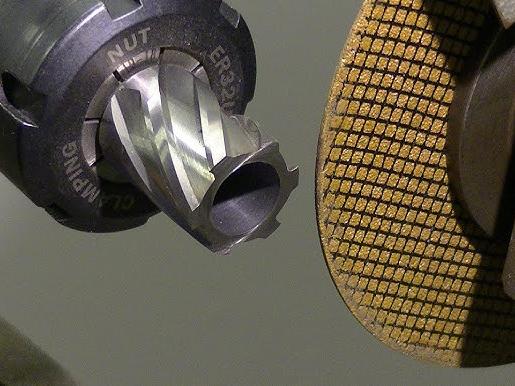
How to Sharpen Annular Cutters
1. Determine if Regrinding is Suitable
First, ensure the cutter is not severely damaged, chipped, or deformed.
The cutter can typically be reground if the cutting edges are dull (not chipped or burnt).
2. Areas to Regrind
Key areas to focus on:
- Tooth Face (Cutting Edge): The primary cutting area that contacts the workpiece.
- Relief Angle (Back Clearance): Maintains a sharp cutting edge.
Note: The sidewall (outer diameter) is generally not ground to maintain a consistent hole size.
3. Tools and Equipment
It is recommended to use a dedicated annular cutter re-sharpening machine, such as those from BDS, JEI, or Hougen.
Grinding wheel types:
- Diamond wheel or CBN (Cubic Boron Nitride) wheel
- Maintain the original relief angle, typically 6–10 degrees

4. Basic Regrinding Steps
- Secure the cutter (vertically or at an angle depending on the machine)
- Align the grinding wheel with each tooth, manually or automatically
- Regrind each tooth evenly, preserving the original profile and angle
- Check for tooth symmetry and balance
- Deburr and clean thoroughly after grinding
Which Types of Annular Cutters Can Be Reground?
HSS (High-Speed Steel) Cutters: Easily regrindable and commonly maintained this way.
TCT (Tungsten Carbide Tipped) Cutters: Can be reground, but requires diamond wheels and experienced technicians.
Solid Carbide Cutters: Not recommended for regrinding due to high brittleness and complexity.
Coated Cutters (e.g., TiN): Can be reground, but coatings will be lost and may need to be reapplied.
Detailed Guide to Annular Cutter Types and Regrindability
| Cutter Type | Material Structure | Regrindable | Recommended Regrinds | Grinding Difficulty | Equipment Required | Remarks |
| HSS (High Speed Steel) Cutter | Solid HSS (e.g. M2, M35) | ✅ Highly Suitable | Typically 3–5 times | ⭐⭐ (Moderate) | Standard grinder + CBN/Alumina wheel | Most common type, easy to regrind, suitable for in-house maintenance |
| TCT (Tungsten Carbide Tipped) Cutter | Carbon steel body + brazed carbide tips | ✅ Conditionally Regrindable | Typically 1–2 times | ⭐⭐⭐⭐ (High) | Specialized grinder + Diamond grinding wheel | Tooth profile must be uniform; recommended for professional grinding services |
| Solid Carbide Cutter | Entirely carbide or alloy material | ❌ Not Recommended | — | ⭐⭐⭐⭐⭐ (Very High) | High-end CNC grinding machine | Brittle and costly; loss of precision/performance after wear |
| Coated Cutter (e.g. TiN, TiAlN) | HSS or TCT base with PVD surface coating | ✅ Regrindable with conditions | Depends on base material | Same as base material | Same as base material | Coating will be removed after grinding; re-coating needed for optimal wear resistance |
| Small Diameter Cutter (≤12mm) | HSS or TCT | ⚠️ Generally Not Recommended | Max 1 time | ⭐⭐⭐⭐ (High) | High-precision micro-grinder | Small tips are prone to breakage; low cost-effectiveness and tighter tolerance requirements |
Conclusion
Proper regrinding of annular cutters—especially HSS and TCT types—not only restores cutting performance but also significantly reduces tooling costs. By using the right equipment, maintaining original geometries, and identifying regrindable cutter types, manufacturers can extend tool life while ensuring precision and productivity. For best results, partner with experienced regrinding service providers or invest in specialized sharpening machines.